
Most Feng Shui advice starts with an object.
Put a money frog here. A plant there. A red ribbon on the door handle. So people do it — and nothing much changes — and they decide either that Feng Shui doesn't work, or that they got the placement wrong and something bad is coming.
Here's the thing that rarely gets said clearly: the object was never the point. The intention was.
What intention actually means in Feng Shui
At its most practical, Feng Shui is the study of how a space affects the way you think and behave.
Not in a woo way. In a very ordinary way. You walk into a kitchen with a clear bench and your shoulders drop. You walk into a room with a pile of unsorted paper and your chest tightens slightly. Nothing mystical happened. Your nervous system read the room and adjusted before you'd formed a thought.
There's more on that in how your home affects your mental wellbeing.
A Feng Shui intention is not a wish. It isn't "I'd like more money" or "I hope to meet someone". It's a decision about use — and decisions can be tested.
Positive intention is simply this: deciding what a room is for — and then letting in only what agrees with that.
Start with the question, not the object
Before you place anything, ask: what do I want this room to do?
Not what do I want it to say — what do I want it to do.
- The entry: I want arriving home to feel like exhaling.
- The kitchen bench: I want to cook without moving five things first.
- The desk: I want to start work without opening anything.
- The bedroom: I want sleep, not admin.
Then ask it of every object: does this help the room do that? If yes, it stays. If no, it goes.
That's the whole practice. Everything else is decoration.
Three steps to a clear Feng Shui intention
Name it. One sentence. This is the room where I rest. Say it out loud or write it down. Vagueness is why most intentions fail — an intention you can't articulate isn't an intention, it's a mood.
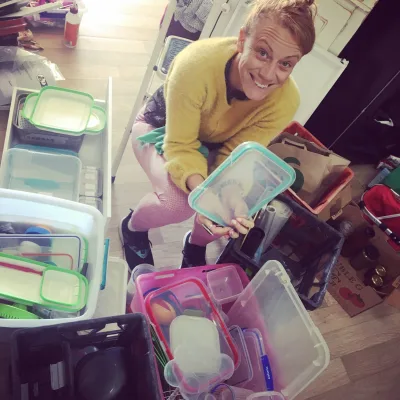
Clear it. Intention cannot land on noise. You can't make a bench "the place where I cook calmly" while it's holding four other people's paperwork. Clearing isn't a separate project from intention — it's how the intention gets through the door.
Place it. Now add the one or two things that support what you named. Not seven. One or two.
The Bagua, used properly
The Bagua is a nine-part map — wealth, health, relationships, creativity, career and so on — laid over your floor plan. It's often taught as a set of slots to decorate.
I prefer to use it as a set of questions.
Walk to the relationship corner and ask: does this part of my home support being connected to people? Or is it where the ironing pile lives? Walk to the wealth corner: does this hold the things I'm building, or the things I'm avoiding?
You don't need to buy anything. The honest answer usually tells you exactly what to move.
One small ritual that works
I ask clients to do one thing: choose a single object that represents what they're working towards, and give it one deliberate place.
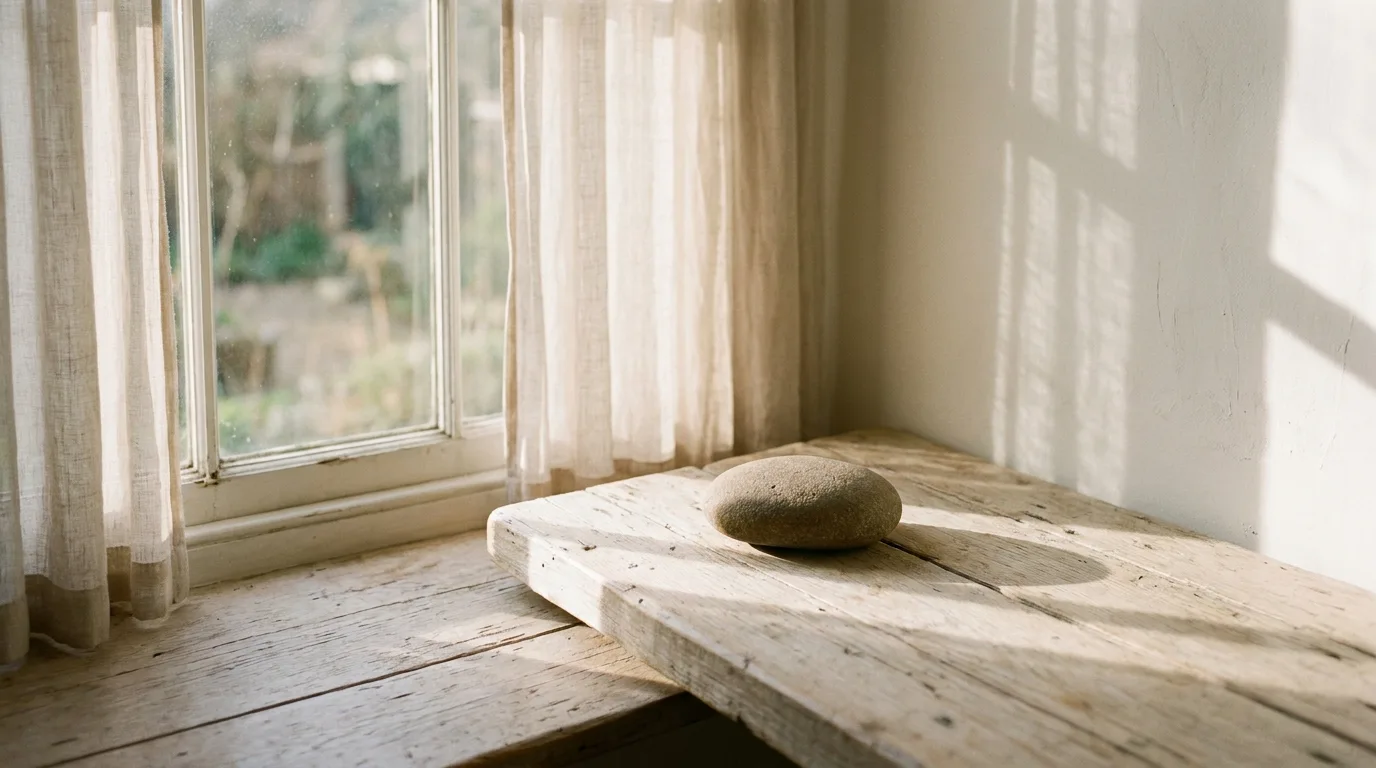 Illustration made with AI
Not a shrine. Not a whole shelf. One object, one spot — and every time they see it, they remember what it's for.
A stone from a walk where you made a decision. A card a friend sent. The bowl you always put your keys in. It doesn't matter what it is. It matters that you decided.
This is the part people miss: the object isn't magic. The remembering is. The object is just a prompt that stops you forgetting your own intention six weeks later.
Why clutter defeats intention
Every object in a room makes a quiet claim on your attention. Most are so faint you'd never notice them individually — but together they blur the message.
A bench piled with mail doesn't say "cook". It says "later". A bedroom with a laptop on the bed doesn't say "rest". It says "one more thing".
You can't hold a clear intention in a space that's saying eleven things at once.
If that sounds like your place, start with the clearing — an end-of-year home reset is a gentle way in. And if you want the energetic side explained properly, this is how Feng Shui and decluttering work together.
The short version
Intention first. Space second. Objects third — and only a few.
Feng Shui works best when it isn't a shopping list. It's a decision, made once, in plain language, and then honoured by what you allow to stay.
Start with one room. Say what it's for. Take out everything that argues with you. Then put back the one or two things that agree.