
Have you ever noticed that the people who are genuinely good at something usually have the most help — not the least?
The best professional organisers have mentors. The best athletes have coaches. The best cooks have someone they ring when it goes wrong.
That isn't a coincidence. Expertise and self-sufficiency are not the same thing. Being excellent at something means knowing precisely where your own limits are — and filling them with other people.
Leaning on your community isn't a fallback for people who can't manage. It's how humans are built to function. Here are five reasons it matters — and none of them are about being weak.
1. It's linked to better health, not just better moods
Strong social connection is consistently associated with better health outcomes and longer life. Not marginally — the effect sizes in large studies are comparable to well-known risk factors like smoking and physical inactivity.
The World Health Organization now treats loneliness and social isolation as a global health priority, for exactly this reason. Connection isn't a nice-to-have that sits on top of your health. It's part of it.
2. Support changes what stress does to your body
There's a well-established finding in health psychology called the stress-buffering effect: people with good support show a smaller stress response and recover faster from it.
In practical terms — the same difficult week lands differently depending on whether you're carrying it alone. Not because the week changed, but because your body had somewhere to put it.
3. You're far more likely to actually do the thing
This is the one that surprises people.
We dramatically overestimate our own follow-through. Committing to something in front of another person — someone who will ask you about it — changes behaviour in a way that motivation alone rarely does.
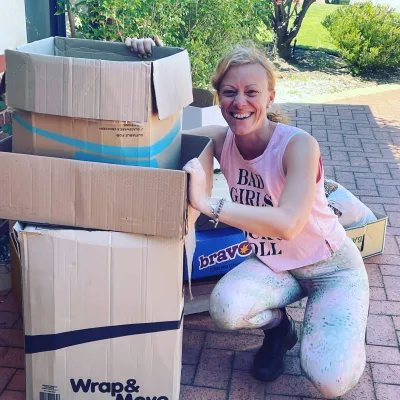
It's why the garage stays full for three years, and then gets cleared in a weekend when a friend offers to help. The task didn't change. The accountability did.
4. Other people can see your blind spots — you can't
This isn't a character flaw. It's how familiarity works.
When you live with something every day, you stop being able to see it. The pile on the bench becomes furniture. The cupboard you avoid becomes part of the house. Your brain files it as normal and stops raising it.
Nobody can see their own blind spots. That's what makes them blind spots. The only reliable fix is a person standing in the room who hasn't been looking at it for ten years.
5. It goes both ways — being needed is good for them, too
Asking for help feels like a burden. It almost never is.
Being useful to someone else is consistently associated with greater wellbeing — volunteering, helping, being relied on. When you ask someone for help, you're not taking from them. You're giving them a place to matter.
That's the part people miss. Community isn't charity in one direction. It's a loop, and asking is how you keep it turning.
What this means in practice
People say "I should be able to do this myself." Or "I'm embarrassed to need help with my own house."
But you could almost certainly declutter your garage alone, given enough weekends, enough energy and enough outside perspective. The only thing you're actually buying when you bring someone in is time, and the eyes of a person who isn't you.
And those two things are exactly what you cannot manufacture for yourself.
Even professional organisers need a hand
I've been doing this work for years, and I still ask. I still get it wrong and need someone to say so.
If you'd like a second set of eyes on your home — not because you've failed at it, but because that's how anyone gets anything done — that's what I do. And if the emotional side is tangled up in it too, how your home affects your mental wellbeing is worth a read.
The last word
Community isn't a luxury you earn once you're organised enough. It's infrastructure — the thing that holds up everything else, including your health, your follow-through and your ability to see clearly.
You don't have to do it alone. You were never supposed to.